

Temporal Numerology: Aligning Your 24-Hour Day with Personal Number Currents
Most numerology focuses on long arcs: life paths, personal years, and nine-year cycles. Fascinating as those are, they can feel distant from the practical rhythm of your day. What if numerology could speak to the hour, not just the era? This article introduces Temporal Numerology—a fresh, hour-by-hour framework that translates your core numbers into a living schedule, helping you decide when to initiate, collaborate, focus, or finish.
Why a 24-Hour Lens Matters
Your calendar is the bridge between intention and outcome. While you can’t control every event, you can choose when you’re most likely to ride a helpful current. Temporal Numerology proposes that every day starts with a unique “seed” energy based on your birth numbers and the calendar. That seed then streams through the 24 hours in a predictable 1–9 cycle. The practice doesn’t replace your free will; it gives you a structured way to time your efforts in harmony with your numbers and your body clock.
The Core Idea: The Hour Current
At any given time, you’re in an Hour Current—a single digit from 1 to 9 that highlights the flavor of action most likely to flow with ease. Think of it like wind direction for a sailor: you can sail in any direction, but some angles are smoother. The trick is to prime the right activities for the right hours.
How to Calculate Your Hour Currents
You only need your birth date and today’s date. We’ll define four layers:
- Life Path Number: Your fundamental signature, reduced to one digit (except for acknowledging master nuances, described below).
- Personal Year: The theme of the year.
- Personal Month and Day: The closer-in weather.
- Day Seed: The starting current of the day, from which each hour unfurls.
Step 1: Life Path Number
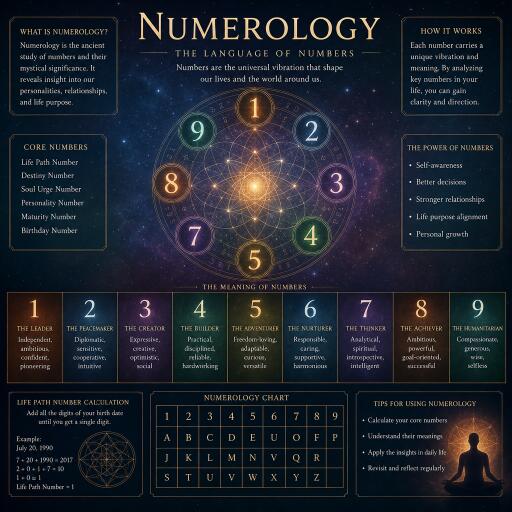
Add all digits of your birth date and reduce to a single digit. Example: 1990-04-18 → 1+9+9+0+0+4+1+8 = 32 → 3+2 = 5 (Life Path 5).
Note on master numbers: If your sum lands on 11, 22, or 33 before the final single-digit reduction, you may hold that as a nuance. For Hour Currents, still reduce to 2, 4, or 6 respectively, but you can treat hours that temporarily compute to 11, 22, or 33 (before final reduction) as “accented.”
Step 2: Personal Year
Personal Year = reduce(birth month + birth day + current year). Example: For someone born April 18 in the year 2026 → 4 + 18 + 2026 = 2048 → 2+0+4+8 = 14 → 1+4 = 5.
Step 3: Personal Month and Personal Day
Personal Month = reduce(Personal Year + current month number). If our Personal Year is 5 and the month is May (5) → 5+5 = 10 → 1.
Personal Day = reduce(Personal Month + day of month). If the day is the 16th → 1+16 = 17 → 1+7 = 8.
Step 4: Day Seed
Day Seed = reduce(Life Path + Personal Day). Continuing the example: Life Path 5 + Personal Day 8 = 13 → 1+3 = 4.
Step 5: Hour Current
Choose a starting clock reference. A purist approach uses midnight local time as hour 0. A practical approach for night owls or shift workers is to set hour 0 at your wake time. Then:
Hour Current at hour h = reduce(Day Seed + h).
For midnight-based mapping, 7:00 a.m. is h = 7. With Day Seed 4 → 4+7 = 11 → reduce to 2. So 7:00–7:59 a.m. resonates with Hour Current 2 (cooperation, sensitivity, listening).
Interpreting the 1–9 Hour Currents
- 1 — Initiation and decisiveness: Start something new, claim leadership, set intentions, make quick calls. Best for kickoffs, pitches, solo sprints.
- 2 — Cooperation and attunement: Listen, collaborate, edit, research, reconcile. Ideal for sensitive conversations, feedback loops, and duo work.
- 3 — Expression and creativity: Brainstorming, writing, presenting, social outreach. Market, teach, rehearse, or design with color and voice.
- 4 — Structure and discipline: Build systems, document SOPs, manage budgets, clean, or code with rigor. Excellent for checklists and operations.
- 5 — Movement and change: Prospecting, travel, testing, sales, and experiments. Try new tools or outreach strategies.
- 6 — Care and refinement: Client care, home and family support, design polish, team morale. Tend gardens—literal or metaphorical.
- 7 — Depth and analysis: Study, research, audit, reflect, meditate, or prototype. Quiet hours suit reading and complex problem solving.
- 8 — Influence and results: Negotiate, lead, manage money, set targets, and move key metrics. High-stakes conversations do well here.
- 9 — Completion and release: Publish, ship, donate, declutter, mentor, and look at the big picture. Integrate learning and close loops.
Designing Your Daily Map
- Compute your Day Seed using the steps above.
- Choose your reference: midnight or your daily wake time. Consistency matters more than which you pick.
- Generate Hour Currents for 24 hours (h = 0 to 23) by adding h to your Day Seed and reducing to 1–9.
- Overlay lived experience: note when you naturally feel energized, social, focused, or reflective. Your chronotype refines the map.
- Place key tasks in compatible slots. For example, schedule deep work during 4 or 7, pitching during 1 or 8, creative sharing in 3 or 9.
Tip: If you use digital calendars, color-code blocks by number—e.g., red for 1, blue for 2, yellow for 3—to make the rhythm visible at a glance.
Case Study: A One-Day Plan
Meet Ana, born 1990-04-18 (Life Path 5). It’s May 16, 2026.
- Personal Year: 4 + 18 + 2026 = 2048 → 14 → 5
- Personal Month: 5 + 5 = 10 → 1
- Personal Day: 1 + 16 = 17 → 8
- Day Seed: 5 + 8 = 13 → 4
Assuming midnight as hour 0:
- 6–7 a.m. (h = 6): 4 + 6 = 10 → 1. Prime hour for setting the day’s intent and listing top priorities. Quick solo decisions.
- 7–8 a.m. (h = 7): 11 → 2. Share plans with a partner or teammate; sync schedules; light emails with a cooperative tone.
- 8–9 a.m. (h = 8): 12 → 3. Draft a social post, outline a talk, or sketch a design; short, expressive work.
- 9–10 a.m. (h = 9): 13 → 4. Build structure: finalize a brief, create a checklist, or update a project board.
- 10–11 a.m. (h = 10): 14 → 5. Make outreach calls, test a new app, or book travel—embrace movement.
- 11 a.m.–12 p.m. (h = 11): 15 → 6. Client care, team check-ins, or polishing the morning’s draft.
- 12–1 p.m. (h = 12): 16 → 7. Quiet lunch, reading, or a short contemplative walk; let insights land.
- 1–2 p.m. (h = 13): 17 → 8. Negotiate scope, review budgets, or lead a high-impact meeting.
- 2–3 p.m. (h = 14): 18 → 9. Publish the day’s content, ship a deliverable, or wrap a milestone.
- 3–4 p.m. (h = 15): 19 → 1. Begin the next cycle with a small, crisp task; set intentions for late afternoon.
Ana repeats the 1–9 sequence roughly every nine hours from the Day Seed start, stepping through it linearly by hour. She doesn’t force reality to fit the map; instead, she stacks odds by aligning key tasks with favorable hours.
Advanced Variations
1. Wake-Time Anchoring
If your workday reliably starts at 10 a.m., set hour 0 to 10:00 a.m. That way, your first hour reflects the earliest discretionary energy in your day. Just keep the reference consistent for a few weeks before judging results.
2. Master Accents
If Day Seed + h equals 11, 22, or 33 before final reduction, you can treat that hour as slightly “brighter” in the thematic energy of 2, 4, or 6. For example, an 11→2 hour might favor sensitive leadership and inspired collaboration over routine teamwork.
3. Micro-Cycles
For detail lovers: split each hour into three 20-minute micro-blocks. Reduce Day Seed + h + block index (0–2). You’ll get a light 1–9 shimmer inside the hour, useful for sequencing micro-tasks (e.g., pitch in the “1” block, respond in the “2” block, draft in the “3” block).
4. Time Zones and Travel
Travel shifts your clock, and with it, your felt currents. When you land, switch to local time and allow a day to acclimate. If you cross the International Date Line, recalculate Personal Day using local date as soon as you’re settled.
5. Domain-Specific Mapping
- Fitness: 1–3 support activation and expression; 4–6 are good for form, endurance, and technique; 7 favors mind-body practices; 8 supports strength; 9 suits cooldown and integration.
- Creativity: 3 for idea flow; 4 for drafting frameworks; 5 for experimentation; 6 for refinement; 9 for publishing.
- Entrepreneurship: 1 for launches; 2 for partnerships; 5 for marketing; 7 for analytics; 8 for monetization; 9 for legacy-building.
Common Pitfalls to Avoid
- Rigidity: The map guides; your judgment decides. Don’t skip a critical call because the hour isn’t “perfect.”
- Ignoring your body: If you’re exhausted in a 1 hour, rest may be the real initiation. Blend numerology with self-awareness.
- Over-optimizing: Start with one or two key blocks per day (e.g., deep work at a 7 hour, outreach at a 5 hour). Add complexity gradually.
- Single-day thinking: Patterns become evident over weeks. Track results across 21–27 days for a fair test.
Quick Start Checklist
- Compute Life Path, Personal Year, Personal Month, and Personal Day.
- Find your Day Seed by adding Life Path + Personal Day and reducing.
- Pick your anchor (midnight or wake time) and compute Hour Currents for your next workday.
- Block two tasks into compatible hours: one deep focus (4 or 7) and one outreach/impact (1, 5, or 8).
- Review outcomes at day’s end. What felt easy? What resisted? Adjust tomorrow’s map.
Why This Works—Symbolically and Practically
Symbolically, numerology encodes archetypal phases of action. Functionally, the practice introduces intentionality and rhythm to your day. Even skeptics find value in a cyclical focus system that alternates initiation, collaboration, creation, structure, and release. By naming the hour’s flavor before it begins, you prime your attention for aligned action.
Closing Thoughts
Temporal Numerology helps you treat time as textured rather than flat. It’s less about magic and more about pattern literacy: a way to organize effort, honor your natural cadence, and place the right task in the right hour. Try it for a single week: identify your Day Seed each morning, schedule two aligned blocks, and reflect each evening. You may discover that your day stops feeling like a blur and starts unfolding like a score—measured, musical, and unmistakably yours.
Note: Numerology is a reflective and symbolic practice. Use it as a supportive tool alongside practical planning and, when needed, professional advice.