

Ambient Numerology: Turning Everyday Digits into Mindful Cues in a Digital World
Every day, numbers sparkle at the edges of our attention: a clock flipping to 11:11, a battery sagging at 22%, a receipt that totals $33.00, a playlist at 9 songs. Classic numerology treats numbers as archetypes with personalities and lessons, but in a screen-saturated age there’s a new frontier: using the numbers that already surround us as gentle prompts for presence, intention, and meaning. Think of it as ambient numerology—less fortune-telling, more attention design.
This approach doesn’t require belief in destiny, only a willingness to treat numbers as symbols in a private language you curate for yourself. It borrows the soul of traditional numerology, then grafts it to the rhythms of modern life: notifications, timestamps, counters, and totals. The result is a practice that’s playful, practical, and quietly transformative.
From Divination to Design
Traditional numerology often aims to decode fate from names and birthdates. Ambient numerology aims to encode meaning into your day. Instead of asking, “What are the numbers predicting?” you ask, “What do I want this number to remind me to do?” The difference is subtle but powerful. It puts you in the driver’s seat, while keeping a sense of wonder alive.
By assigning personal meanings to selected numbers, you turn scattered digital signals into mindful cues. It’s behavior design camouflaged as symbolism—a way to seed small rituals into the flow of ordinary moments.
The Ambient Numerology Framework
Here’s a simple framework you can adopt and adapt:
- Pick two anchor numbers. Start with just two. You might choose a classic pair like 1 (initiate) and 6 (nurture), or pull numbers from your birthday, house number, or a meaningful date. Keep it simple at the start.
- Define their micro-meanings. Assign a single clear behavior to each number. Example:
- 1 = begin: send one message you’ve been avoiding, take one deep breath, do the first minute of a task.
- 6 = care: drink water, text a kind note, stretch your shoulders, step away from the screen.
- Set “soft triggers.” Decide the contexts where these numbers will count. For instance: whenever you see 1:01, a 10:01 email timestamp, a 1-item badge, or $10.01. For 6, maybe 6%, 6:00, a 6 in a tracking app, or a folder with 6 files.
- Respond with tiny actions. When a trigger appears, do the smallest possible version of your action. If you can’t, acknowledge it mentally and do it at the next reasonable moment. No guilt; this is a compassion-first practice.
- Keep a noticing log. Jot quick notes for a week. What triggers showed up? Did you act? How did it feel? Patterns will emerge, and your intuition will sharpen.
- Reflect and refine monthly. Rotate one anchor number in or out. Upgrade meanings if they feel stale. Your system should stay fresh, like rearranging the room of your attention.
Where Your Numbers Hide All Day
To play this well, you need to know where numbers naturally surface. Here are rich hunting grounds for ambient numerology:
- Clocks and timers: Obvious, yes, but potent—1:11, 2:22, 12:34. Also attention-worthy: countdowns, stopwatch laps, Pomodoro intervals.
- Battery levels: 33%, 44%, 66% become instant cues. A dying battery can mean “wrap up with care” instead of panic.
- Notification badges: A badge with 3 becomes “triage three messages; then stop.” Or 0 becomes a cue to breathe and reset.
- Health and activity apps: Step counts, heart rate, sleep scores, streaks. Treat them gently; never as self-judgment fuel.
- Money touchpoints: Totals on receipts, tip percentages, transaction times. Let a $7.77 stint be a gratitude pause.
- Files and versions: Document v1.6, 6 items in a folder, 9 drafts in a project.
- Queues and tickets: Order numbers, boarding groups, service counters calling 52 next.
These layers are already there, whispering. Ambient numerology just gives you a way to listen on purpose.
Assigning Meanings: A Starter Palette
If you need a jumping-off point, borrow a light-touch version of common numerological motifs. Don’t treat these as laws—think of them as poetic seeds you can replant in your own garden:
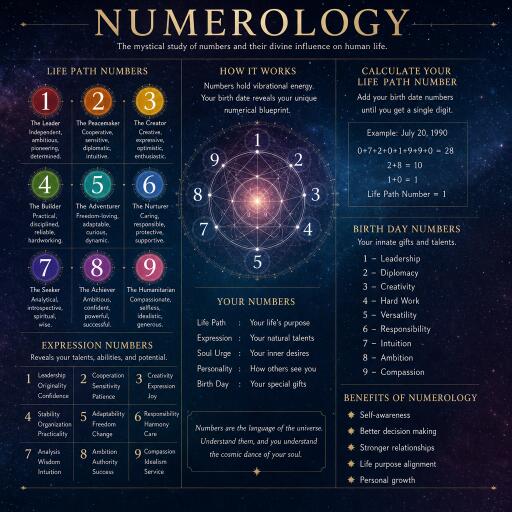
- 1 = spark: begin, make the first small move.
- 2 = partner: ask for help, pair up, balance two priorities.
- 3 = express: write a sentence, speak up, brainstorm three ideas.
- 4 = ground: tidy a corner, schedule, align posture.
- 5 = shift: take a quick walk, change context, try a different route.
- 6 = care: hydrate, check on someone, nourish.
- 7 = reflect: pause for insight, journal one line, notice a pattern.
- 8 = build: manage resources, plan next steps, invest a focused 8 minutes.
- 9 = release: archive, donate, finish the last 1%, let go.
Optional twist: reduce your birthday to a single digit (add all digits until 1–9 remains) and give that number a privileged role—your “home frequency.” Encountering it might mean “return to who I intend to be.” This nod to classic numerology can anchor your modern practice.
Three Mini Case Stories
- Amanda, product manager: She picked 4 (ground) and 9 (release). At 4:40—or any file with 4 versions—she’d organize a tiny patch of her desktop. When receipts ended in .90 or she saw a 9 notification count, she archived one old document. After six weeks, her digital workspace felt less like a storm.
- Ravi, nurse: He chose 6 (care) and 2 (partner). When his smartwatch flashed 6% battery, he’d drink water; when he saw 2 in bed assignments or timestamps, he’d check in on a colleague. The numbers became a compassion loop in a hectic shift.
- Maya, grad student: She used 1 (spark) during 1:xx times to start 60-second drafts, and 7 (reflect) at 7:07 to write a single sentence of meta-notes. Her procrastination softened because the threshold to begin was tiny.
Dealing with Randomness, Bias, and Skepticism
Let’s be honest: our brains are pattern-finding machines. Apophenia (seeing patterns in randomness) and confirmation bias (noticing what we expect) are part of the territory. That’s fine—ambient numerology doesn’t deny randomness; it harnesses it. You’re not proving cosmic causality; you’re inventing gentle meaning in the noise, the way a musician hears rhythm in passing traffic and then composes with it.
If the practice keeps you grounded, kind, and more aware, it’s working. If it inflames anxiety or magical thinking that harms decisions, adjust or stop. This is a garden, not a trap.
Build Your Personal Number Ecology
Over time, expand your palette with intention:
- Seasonal rotations: Quarter by quarter, pick a “season number” that shapes your focus. Q1 might be 1 (foundations), Q2 could be 3 (communication), Q3 is 5 (experimentation), Q4 is 8 (consolidation).
- Context-specific sets: Create distinct meanings for work vs. home. 4 at work = “document,” but 4 at home = “declutter one item.”
- Threshold numbers: Design rituals for entries and exits: apartment number when you arrive (presence), floor number in an elevator (posture reset), parking space digits (gratitude cue).
- Cyclic companions: Pair numbers. When 2 and 8 appear in proximity, maybe that means “ask for a resource” then “allocate it wisely.”
A 7-Day Starter Lab
Try this one-week experiment to make ambient numerology real:
- Day 1: Choose anchors. Pick two numbers and one action each. Write them on a sticky note.
- Day 2: Define triggers. Decide three places you’ll look for each number (e.g., clock, battery, badges).
- Day 3: Tiny actions only. Cap each response at one minute. The point is consistency, not heroics.
- Day 4: Notice resistance. When you skip, note why. Tweak the action to be smaller or kinder.
- Day 5: Add a third, rare number. Give it a celebratory meaning, like “dance for 10 seconds” or “smile on purpose.”
- Day 6: Share one story. Tell a friend what you noticed. Social reflection deepens pattern-making.
- Day 7: Review. Which triggers felt alive? Which were noisy? Keep two, archive one, and plan next week.
Ethics, Boundaries, and Digital Wellbeing
Because this practice lives in your devices and dashboards, it’s important to avoid turning mindfulness into more screen-time. A few guardrails help:
- No compulsive checking. The practice should ride on what you already see, not drive you to reload apps for cues.
- Low-friction actions. If an action routinely interrupts deep work, make it micro or defer it. You can batch responses later.
- Gentle data. Health numbers are sensitive. If a metric triggers shame, take it off your roster.
- Opt out anytime. If a number loses its glow or creates pressure, retire it with a thank-you. Freedom is part of the magic.
Advanced Variations for the Curious
- Musical mappings: Map digits 1–7 to the degrees of a scale. When a “5” appears, hum the dominant note. You’re weaving sound into symbol.
- Spatial numerology: Tie meanings to places: bus route 9 means “let go,” floor 3 means “speak up” before meetings.
- Project sigils: Give each project a number and a one-line vow. When that number shows up, take a micro-step for that project.
- Ritual bookends: On the 1st of each month, declare a beginning. On the 9th, release one possession or habit. On the 7th, reflect in a journal.
What Makes It “Numerology” (and Not Just Habits)?
The line between ritual and routine is thin. Ambient numerology becomes numerology when you treat numbers as symbols with personality and story. You’re not only optimizing; you’re conversing. 4 isn’t just “organize”—it’s the feeling of a table steadied. 3 is the spark of a sentence that lands right. 9 is the exhale you didn’t know you were waiting for.
Allow yourself a little myth. Let 11:11 be a punctuation mark in your day—a moment you choose to align with what matters. The myth doesn’t have to be literal to be powerful. It just has to help you remember.
Common Pitfalls (and How to Dodge Them)
- Too many numbers at once. Start small. Two anchors can change the texture of a week more than ten competing signals.
- Meanings that are too big. Keep actions micro. “Write the chapter” is a recipe for avoidance. “Write one messy sentence” works.
- Turning cues into pressure. If seeing 4 makes you tense, swap in a gentler verb like “stack” or “straighten” instead of “organize.”
- Chasing signs. You don’t need to force synchronicity. Let it come to you, the way birdsong enters a quiet room.
Closing: The Numbers That Find You
There’s a private joy in letting the world speak a little, even if you know you’re the one giving it vocabulary. Ambient numerology meets you where you already are—on a crowded train with a battery at 23%, in a coffee line as ticket 77 flickers, at your desk when the timestamp reads 12:34. These are not omens to obey but invitations to inhabit your day with intention.
Whether you hold numerology as sacred symbolism or playful metaphor, its value in a digital age might be simplest of all: it teaches you to notice. And in that noticing—one breath at 1:01, one kindness at 6%, one release at 9—you assemble a life that feels a little more designed from the inside out.