

Mapping Your Number Neighborhood: A Locational Approach to Numerology
Most numerology explores who you are—your Life Path, your Destiny, your personal year. But there’s another, often overlooked frontier: where you are. The spaces you inhabit every day—your apartment number, the bus line you ride, the floor you work on, the locker you choose at the gym—quietly repeat numbers back to you. Over time, these digits form a pattern of place-based influences, shaping how your days feel and flow. I call this your “Number Neighborhood”—a living map of numeric energies stitched through your daily landscape.
This article introduces a fresh, practical method for noticing, charting, and working with the numbers of your places. You’ll learn how to collect the data, reduce and interpret it, identify supportive “ally” spots, and design gentle routines that harmonize with the numeric moods of your life. You don’t need to be a numerology expert to begin—you only need curiosity and the willingness to look at your familiar world with new eyes.
What Is a Number Neighborhood?
A Number Neighborhood is the cluster of recurring numbers attached to your places—fixed and fleeting—that shape the felt texture of your days. Examples include:
- Fixed place numbers: your home address and unit, building number, floor number, mailbox, parking space, locker, workspace, favorite café table, or gym station.
- Transit numbers: bus or train lines, platforms, exits, gate numbers, seat assignments.
- Micro-locations: hotel room numbers on trips, conference rooms, co-working desks, library stacks or study carrels.
- Ambient markers: neighborhood block numbers, mileposts on your running route, trail markers, or even Wi-Fi SSIDs that include digits.
Just as your birth name and date carry a frequency, these numeric signatures attached to your places hum in the background. Some steady you; some propel you; others challenge or exhaust you. When you map them, you uncover a quiet cartography of support that was hiding in plain sight.
How to Build Your Map in 7 Days
Set aside one week to observe and record. Keep notes in your phone or a small notebook. The goal is not obsessive cataloging, but attentive noticing.
- Choose your route anchors. List 5–10 places you visit most: home, work, gym, favorite café, grocery, a friend’s home, a park bench. Add routine transit links (e.g., Bus 14, Train B).
- Capture the digits. For each place, record the visible numbers: addresses, suite or unit numbers, floor, desk, locker, table, and any repeating signage (e.g., “Stairwell 3”). For transit, note line numbers, platforms, typical car or seat preferences.
- Reduce to core numbers. Add the digits until you get a single digit (1–9). If you hit 11, 22, or 33 along the way, you can keep these “master numbers” intact if that aligns with your practice; otherwise, reduce them as well (11 → 2, 22 → 4, 33 → 6).
- Tag the felt sense. Each time you’re in a place, jot a one-word or short phrase mood: “calm,” “focused,” “hurried,” “electric,” “scattered,” “cozy,” “social.” Don’t overthink—capture your first honest impression.
- Note time windows. Some places feel different at 8:00 a.m. than at 4:00 p.m. Note time of day for each observation.
- Count frequency. At week’s end, tally how often each digit (and any master numbers) appears across your places and rides.
- Cluster by theme. Group observations by mood and by function—work, rest, relationships, creativity, errands. See which digits dominate each cluster.
The result is a simple dashboard: You’ll see which digits accompany your best focus, your social ease, your body recharge, your creativity bursts, and where your frictions tend to appear.
A Quick Reference to Place Energies
Every numerologist has a personal nuance, but a concise place-oriented guide can help you start:
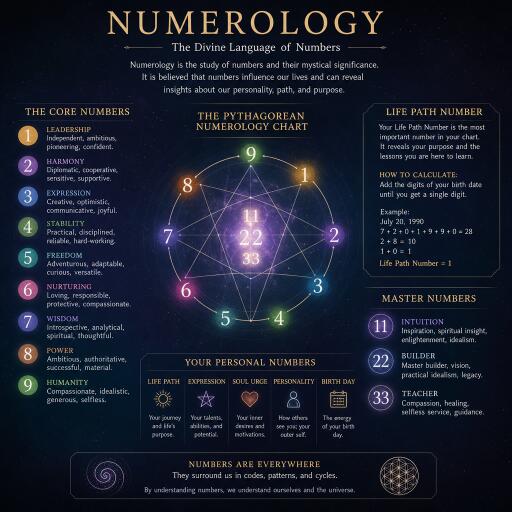
- 1 — Initiative, independence, directness. Good for starting tasks, solo sprints, decision-making.
- 2 — Cooperation, listening, subtlety. Good for conversations, mediation, soft planning, quiet research.
- 3 — Expression, sociability, play. Good for brainstorming, presentations, light creative work.
- 4 — Structure, discipline, practicality. Good for systems, admin, budgets, step-by-step progress.
- 5 — Motion, change, novelty. Good for exploring, networking, marketing, travel planning.
- 6 — Care, harmony, aesthetic order. Good for home projects, refining, hosting, wellness routines.
- 7 — Reflection, depth, study. Good for analysis, writing, prayer/meditation, deep work.
- 8 — Power, execution, results. Good for negotiations, leadership, launches, measurable outcomes.
- 9 — Closure, compassion, vision. Good for finishing, editing, donating, mentoring, big-picture thinking.
- 11 — Insight, inspiration, intuitive leaps. Powerful for ideation and spiritual study; can feel “buzzing.”
- 22 — Master builder energy. Vision plus logistics; ideal for planning infrastructures or long projects.
- 33 — Elevated service and guidance. Group teaching, community care, harmonizing differing needs.
- 0 — The void/seed. It amplifies nearby digits or invites pause and reset.
Finding Allies, Gateways, and Friction Zones
As patterns emerge, categorize your places:
- Ally places: Spots where your mood notes consistently match the digit’s domain. For example, a 4-dominant desk where you always tidy your backlog without stress.
- Gateway places: Thresholds that help you switch gears—like a 2 hallway that softens your energy before a 7 study nook, or a 9 park bench that helps you release a workday.
- Friction zones: Places where your intention and the digit repeatedly clash—like trying to do deep focus (7 task) at a 3 café table that sparks chatter, or making big decisions (1 task) in a 5 transit hub that keeps you moving.
The goal is not to abandon friction zones, but to match tasks to the place’s natural rhythm, or introduce a counterbalance ritual (see below).
Designing a Week That Flows
Once you see where each digit clusters in your routine, experiment with small design shifts:
- Task placement: Move your most administrative chores to the 4 place in your day. Book your calls in a 2 or 3 place. Finish drafts in a 9 place. Do first passes in a 1 place.
- Time nesting: If a place has strong energy at a certain hour, nest a matching task there for a 30–60 minute session, even if it’s virtual work you carry on a laptop.
- Transit leverage: If your commute is a 5 loop (line 5, stop 5), use it to introduce variety: queue a different podcast per day, or use it as a brainstorm corridor rather than trying to finalize a report.
- Backup micro-places: Identify a backup ally for each core task—e.g., a second 7 spot for deep work on days your main study is occupied.
Micro-Rituals to Tune the Space
When you can’t change places, you can gently steer their mood:
- In a 3 place where you need 7 focus: Put on noise-canceling headphones, set a visible 40-minute deep-work timer, and keep the tabletop minimal.
- In a 5 place where you need 1 decisiveness: Stand for the first 10 minutes, write a single-sentence outcome on a sticky note, and act on the first small decision.
- In a 4 place where you need 3 play: Add a splash of color, choose a creative playlist, and set a constraint that turns the task into a game.
- In an 8 place where you need 2 softness: Begin with one minute of breathing, open with a question rather than a directive, and end by summarizing shared points.
These aren’t superstitions; they’re small, embodied cues that help align a task with the ambient numeric “weather.”
Case Example: Mara’s Daily Web
Mara lives at 4827 Oak Street, Unit 3B, and works on the 14th floor of a downtown building. She lifts at Gym Locker 22, writes at Library Carrel 107, and takes Bus 8 home on Tuesdays.
- Home address 4827 → 4+8+2+7 = 21 → 2+1 = 3 (expressive, social).
- Unit 3B → 3 + (B=2 if letter-counted A=1, B=2) → 3+2 = 5 → 5 (movement, variety). If she prefers, she can treat B as simply a modifier and keep 3 as the central tone.
- Work floor 14 → 1+4 = 5 (dynamic, busy, shifting priorities).
- Locker 22 → master 22 (builder), or reduced to 4 if she wants steadiness.
- Carrel 107 → 1+0+7 = 8 (execution, results), with 0 amplifying the 1 and 7 components.
- Bus 8 → 8 (power, forward motion).
After a week of notes, Mara notices:
- At home (3/5 blend), she’s chatty and full of ideas at breakfast but can’t finish spreadsheets.
- On the 14th-floor office (5), she starts projects easily but gets pulled into conversations and shifting priorities.
- At Locker 22 (22/4), her workouts feel grounded and progressive when she follows a plan.
- At Carrel 107 (8), she consistently finishes reports in half the usual time.
Design shifts she tries:
- She moves her morning admin to a small 4 spot: the mail area labeled “Box 124” at her building’s lobby table. She spends 25 minutes there sorting bills and drafting budgets before heading out. It feels oddly perfect.
- She schedules creative ideation calls from home (3), where her voice is freer, and uses the office (5) for networking and status updates that benefit from motion.
- She pairs the Tuesday Bus 8 ride with “Finish One Thing” time—editing one presentation slide deck—so she rides the 8 energy to completion.
- On days when the library carrel is full, she finds a backup 8 mini-spot: an “Aisle 71–80” study row that still sums to 8 (7+1=8; 8+0=8), and gets similar results.
Within two weeks, Mara reports smoother transitions and fewer days that feel “off for no reason.” The places didn’t change—her awareness and task placement did.
Expanding the Map: Travel, Nature, and Digital Spaces
Your Number Neighborhood breathes with your life.
- Travel: Hotel rooms, gate numbers, rental car spaces—they’re ephemeral but potent. On trips, use 1 and 5 numbers for reconnaissance and exploring, and seek 4, 6, or 8 nooks to consolidate notes and send decisive emails.
- Nature: Look to trail markers, mileposts, or bench plaques. A 7 grove could be your meditative anchor, while a 9 overlook becomes your letting-go spot after a long week.
- Digital places: Not every “place” is physical. Zoom Room 314, Project Folder 22, or a Slack channel with a number can carry the same cues. If a meeting room number screams 3, open with a warm check-in to match the social tone before moving to structure.
What About Conflicts or Changes?
Sometimes a place’s felt sense seems to contradict the digit, or your life shifts and a former ally turns stale. That’s normal.
- When number and mood clash: Favor your lived data. If the 7 study corner feels buzzy and shallow, ask what in the environment (lighting, traffic) is adding a 3 or 5 overlay, and adjust.
- When a place evolves: Numbers are steady, but our seasons change. Re-run a 3-day mini-audit each quarter and update your map.
- When you can’t choose: If you’re assigned a room or seat, use a micro-ritual to invite the energy you need. You’re co-creating with the place.
Ethics, Privacy, and Gentle Skepticism
Never publish your exact addresses, unit numbers, or locker details. Your map is for you. Hold numerology lightly: it’s a language for noticing patterns, not a cage. If a practice nudges you toward rigidity, step back and re-engage with play. Let outcomes—not beliefs—guide your iterations.
Think of Number Neighborhoods as a local weather report. You still choose your coat; you simply choose more wisely.
Quick Start Checklist
- Pick 5–10 frequent places and transit links.
- Write down their prominent numbers.
- Reduce each to a core digit (note master numbers if you prefer).
- Log simple mood tags for a week.
- Match tasks to ally places; assign gateways for transitions.
- Add one micro-ritual to any friction zone.
- Review after seven days; refine your placements.
FAQs
Do I need to use master numbers? Only if that resonates. Many practitioners keep 11/22/33 intact; others always reduce. Consistency matters more than the rule.
How do I treat letters in unit names? You can map A=1, B=2,…, I=9, then continue J=1, etc. Or keep the digit as the anchor and note the letter as a stylistic modifier. Try both and see which aligns with your lived mood logs.
What if a place has multiple numbers (e.g., Building 7, Floor 3, Room 412)? Record each and note which one your attention lands on first—often that’s the operative tone. You can also aggregate (7+3+4+1+2) to read a composite and compare it to your experience.
Is zero important? Yes. Zero often amplifies or invites pause. In a 10th-floor workspace (1 amplified by 0), you may feel strong starts but benefit from a brief emptiness ritual (one minute of silence) before beginning.
Can I “change” a place’s number? The digits are given, but your relationship is fluid. Behaviors, signage you choose (like numbering your own shelves), and micro-rituals can shift the felt balance.
Closing: Live Locally, Numerically
Your life isn’t abstract. It’s lived in hallways and corners, at counters and benches, between platforms and porches. The numbers attached to those places are small clues—breadcrumbs leading you to smoother weeks, kinder transitions, and creative pockets you didn’t know you had. Map them. Listen. Trade force for flow. When you align the “where” with the “what,” your days often click into place with less effort and more grace.